

Top B2B Marketing Trends Shaping Demand Generation
 Darshan JainDecember 18, 20251 Mins read0
Introduction
B2B demand generation is evolving rapidly. Buyer expectations are higher, attention is fragmented, and traditional tactics are producing diminishing returns. Companies that continue to rely on outdated playbooks struggle to generate consistent pipeline.
Modern demand generation is driven by data, relevance, and alignment across teams. Understanding current trends is critical for organizations that want to stay competitive and build sustainable growth.
This article explores the most important B2B marketing trends shaping demand generation today.
Shift From Lead Volume to Lead Quality
One of the most significant changes in B2B marketing is the move away from volume driven metrics.
Organizations are prioritizing:
- High intent prospects
- Account relevance
- Sales accepted leads
- Pipeline contribution
Quality focused demand generation improves efficiency and strengthens sales trust.
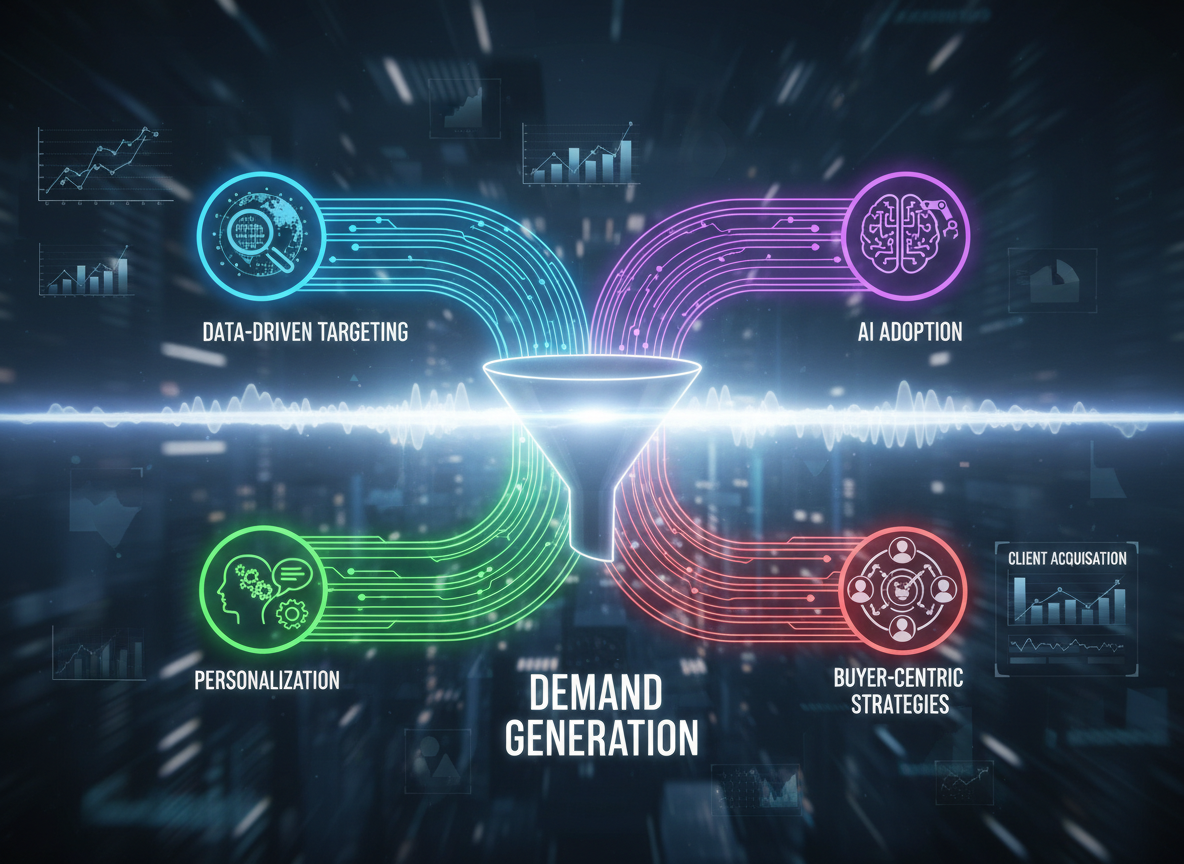
Increased Use of Data Driven Targeting
Broad targeting no longer works in competitive B2B markets.
Modern teams rely on:
- Firmographic precision
- Intent signals
- Behavioral data
- Buying stage awareness
Data driven targeting ensures marketing reaches the right accounts at the right time.
Personalization Across the Buyer Journey
Generic messaging fails to engage modern buyers.
Personalization now extends to:
- Content recommendations
- Email timing and messaging
- Role specific communication
- Account level engagement
Relevant experiences improve engagement and accelerate conversion.
Growing Role of AI in Demand Generation
Artificial intelligence is becoming embedded in demand generation workflows.
Common applications include:
- Predictive lead scoring
- Campaign optimization
- Content performance analysis
- Buyer behavior prediction
AI helps teams scale precision without increasing manual effort.
Stronger Sales and Marketing Alignment
Demand generation success depends on alignment.
High performing organizations:
- Share pipeline goals
- Agree on lead definitions
- Use common performance metrics
- Maintain feedback loops
Alignment reduces friction and improves revenue outcomes.
Emphasis on Buyer Education
Buyers expect value before engagement.
Demand generation now focuses on:
- Educational content
- Problem focused messaging
- Solution comparison
- Trust building over time
Educated buyers move faster through the funnel.
Measurement Focused on Revenue Impact
Marketing teams are being held accountable for outcomes.
Key measures include:
- Pipeline contribution
- Revenue influence
- Cost efficiency
- Conversion quality
This shift elevates marketing from activity execution to revenue responsibility.
Final Thoughts
B2B demand generation is becoming more strategic, data driven, and buyer focused. Organizations that adapt to these trends build stronger pipelines and more predictable growth.
Those that ignore them risk falling behind in an increasingly competitive landscape.








Leave a comment