

Inbound vs Outbound B2B Lead Generation: What Delivers Better ROI?
 Darshan JainDecember 18, 20251 Mins read0
Introduction
The inbound vs outbound debate in B2B marketing is outdated — yet most teams still pick sides instead of looking at ROI objectively. In 2025, the real question is not which is better, but when and how each approach delivers results.
Companies that blindly rely on only inbound or only outbound usually struggle with inconsistent pipelines and unpredictable revenue. The winners understand the strengths, limitations, and use cases of both.
Understanding Inbound B2B Lead Generation
Inbound lead generation focuses on attracting prospects through content and value-driven engagement.
Common inbound channels:
- Blogs and SEO
- Whitepapers and guides
- Webinars and gated assets
- Organic social and email nurturing
Where inbound works best
- Long-term demand creation
- Educating problem-aware buyers
- Building brand authority
- Lower cost per lead over time
Where inbound fails
- Slow results (especially for new domains)
- Poor lead quality without intent filtering
- Heavy reliance on content consistency
Inbound without strategy becomes traffic without revenue.
Understanding Outbound B2B Lead Generation
Outbound lead generation focuses on proactively reaching prospects who match your ICP.
Common outbound channels:
- Cold email
- LinkedIn outreach
- Tele-calling
- Account-based campaigns
Where outbound works best
- Faster pipeline generation
- Highly targeted accounts
- New product or market launches
- Enterprise and mid-market sales
Where outbound fails
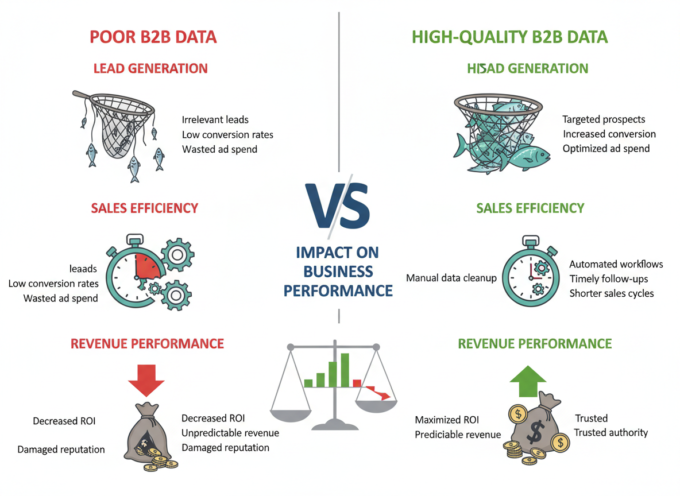
- Poor data quality
- Generic messaging
- Over-automation
- No follow-up strategy
Bad outbound feels like spam. Good outbound feels relevant.
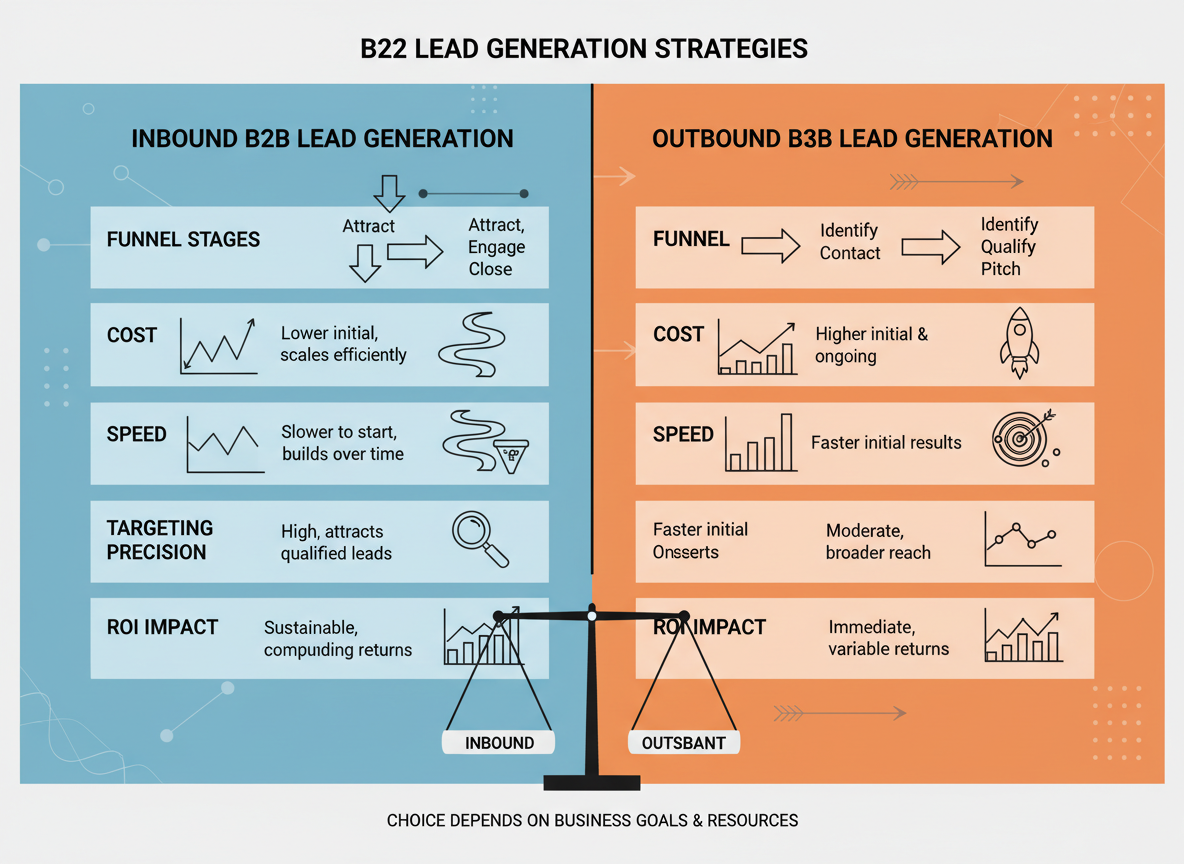
ROI Comparison: Inbound vs Outbound
Let’s be clear — ROI depends on execution, not channel.
| Factor | Inbound | Outbound |
|---|---|---|
| Time to results | Slow | Fast |
| Cost per lead | Lower long-term | Higher initially |
| Scalability | Content-driven | Data-driven |
| Control | Limited | High |
| Predictability | Medium | High (when done right) |
Inbound compounds over time. Outbound produces immediate signal.
The Real Winner: A Hybrid Model
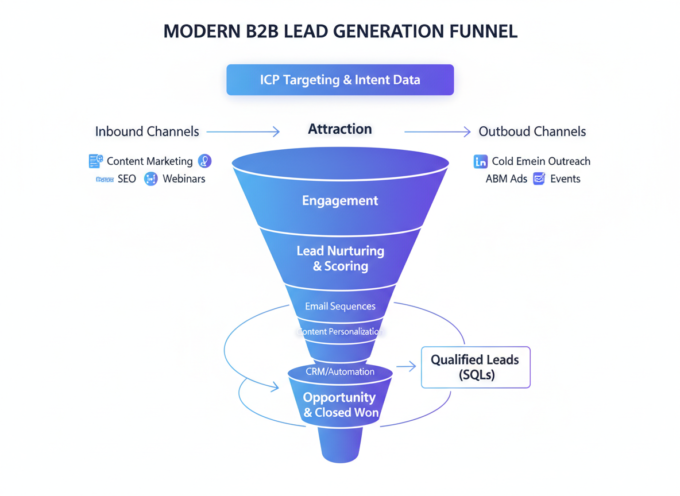
High-performing B2B companies don’t choose — they combine.
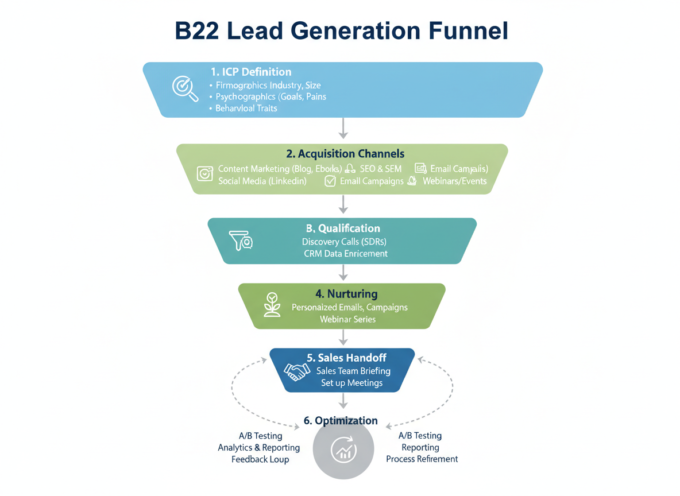
Effective hybrid approach:
- Inbound builds authority and warms the market
- Outbound converts high-intent and high-value accounts
- Intent data decides outreach priority
- Nurturing connects both systems
Inbound fills the funnel. Outbound accelerates it.
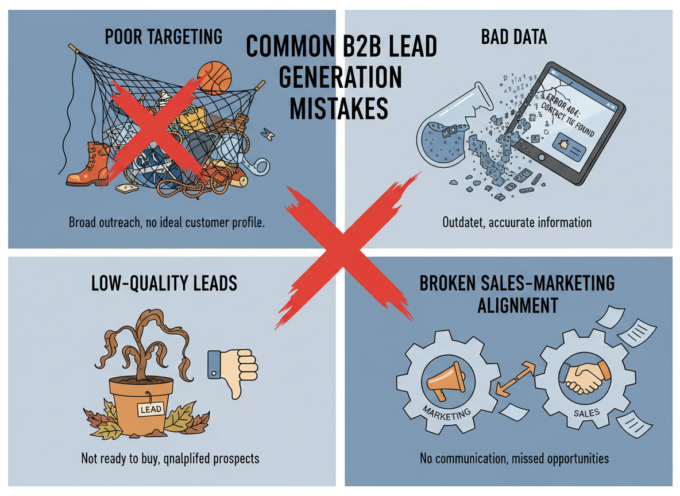
Common Mistakes Companies Make
- Expecting inbound to replace outbound
- Treating outbound as a volume game
- Ignoring lead nurturing after first touch
- Measuring leads instead of revenue impact
If sales and marketing aren’t aligned, both models fail.
Final Verdict
Inbound and outbound are tools, not ideologies.
If you want:
- Speed → outbound
- Scale → inbound
- Predictability → both
The best ROI comes from integration, not preference.




Leave a comment