

How to Choose the Right MarTech Stack for Your B2B Business
 Darshan JainDecember 18, 20252 Mins read0
Introduction
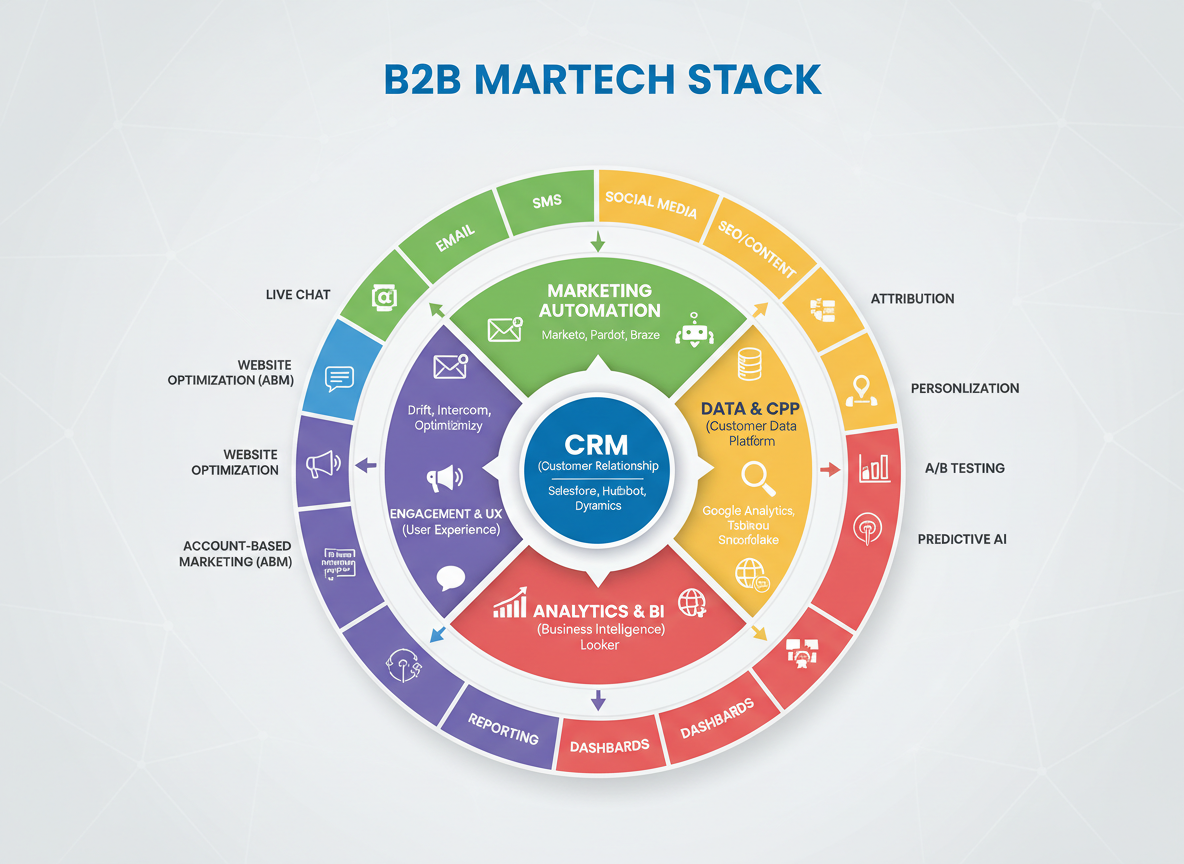
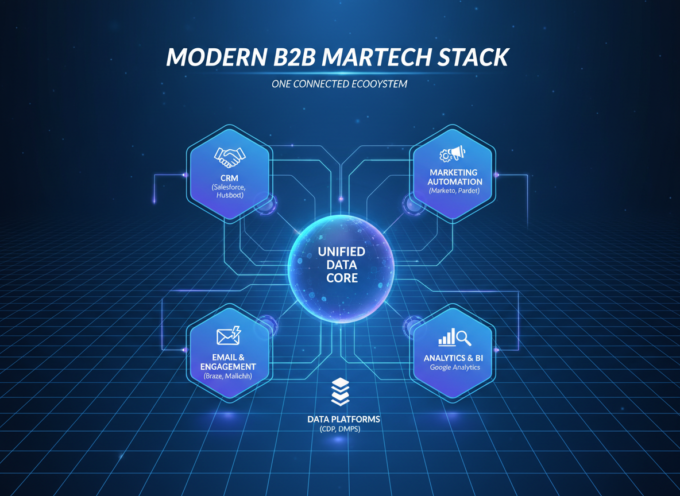
Most B2B companies don’t choose a MarTech stack — they accumulate one. Over time, tools are added to solve immediate problems, integrations become messy, and teams struggle to extract real value.
A strong MarTech stack is not about how many tools you use. It’s about how well they work together to support your business goals.
This article explains how B2B teams should logically select and build a MarTech stack that scales without unnecessary complexity.
Step 1: Start With Business and Revenue Goals
Technology should never lead the decision.
Before evaluating tools, define:
- Revenue targets
- Ideal customer profile
- Sales cycle length
- Go-to-market model
Your MarTech stack should directly support how your business makes money.
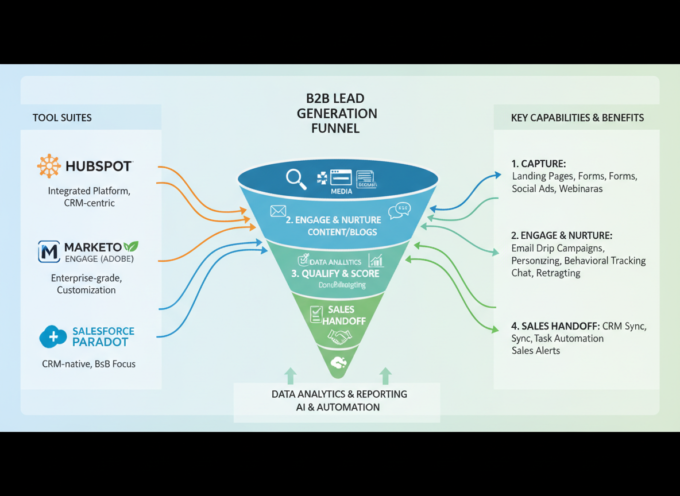
Step 2: Map Your Buyer Journey and Funnel
Different stages require different capabilities.
Key questions:
- How do prospects discover you?
- How are leads captured?
- How are they qualified?
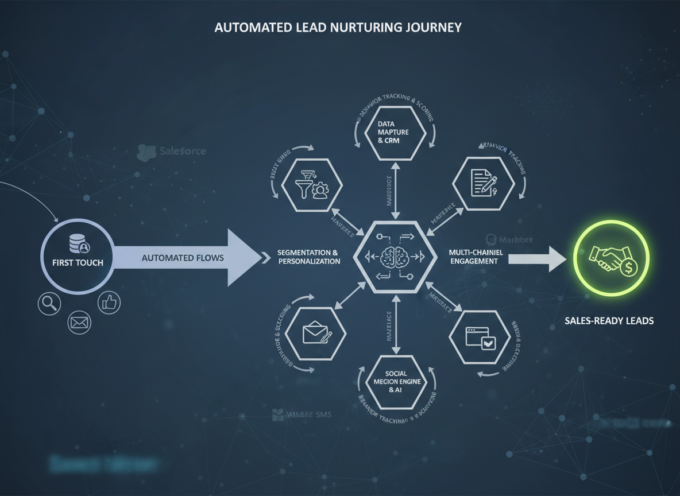
- How are they nurtured?
- When are they handed to sales?
This mapping prevents tool overlap and ensures every platform has a purpose.
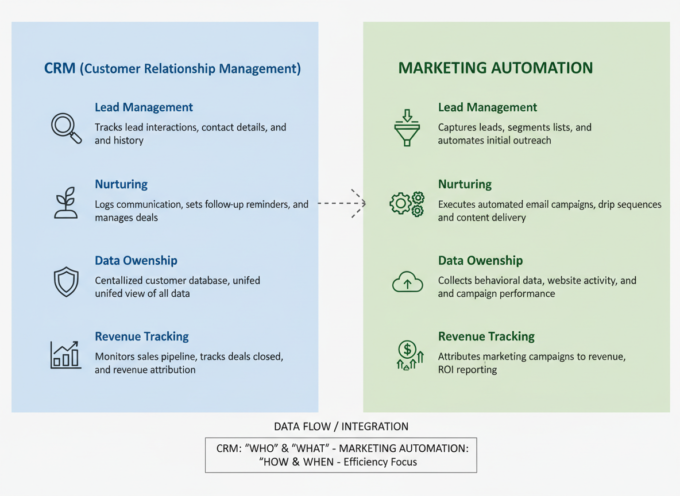
Step 3: Choose a Strong CRM as the Foundation
Your CRM is the core of your stack.
A good CRM:
- Centralizes lead and account data
- Aligns marketing and sales
- Tracks pipeline and revenue
- Integrates with other tools
If the CRM is weak or poorly implemented, everything else suffers.
Step 4: Add Marketing Automation Strategically
Marketing automation should enhance execution, not complicate it.
Look for:
- Easy workflow creation
- Lead scoring flexibility
- CRM synchronization
- Scalable email capabilities
Avoid platforms that require heavy customization just to perform basic tasks.
Step 5: Prioritize Data and Analytics Tools
Without data visibility, optimization is impossible.
Essential capabilities:
- Campaign performance tracking
- Funnel analytics
- Attribution reporting
- Data enrichment and validation
Clean, connected data improves every decision.
Step 6: Evaluate Integration and Usability
The best tools are useless if teams don’t use them.
Evaluate:
- Native integrations
- API availability
- Ease of use
- Training requirements
- Ongoing maintenance effort
Complexity kills adoption.
Step 7: Build for Scalability, Not Perfection
No MarTech stack is ever “finished.”
Plan for:
- Future growth
- Increased data volume
- New channels
- Evolving buyer behavior
Start with essentials. Expand only when value is clear.
Common Mistakes to Avoid
- Buying tools based on hype
- Overlapping functionality
- Ignoring data quality
- Failing to train teams
- Measuring activity instead of outcomes
These mistakes turn MarTech into a cost center instead of a growth engine.
Final Thoughts
Choosing the right MarTech stack is a strategic decision, not a technical one. When built thoughtfully, it improves efficiency, visibility, and alignment across teams.
The goal isn’t more tools — it’s better execution.




Leave a comment