

How to Build a Scalable B2B Lead Generation Funnel from Scratch
 Darshan JainDecember 18, 20252 Mins read0
Introduction
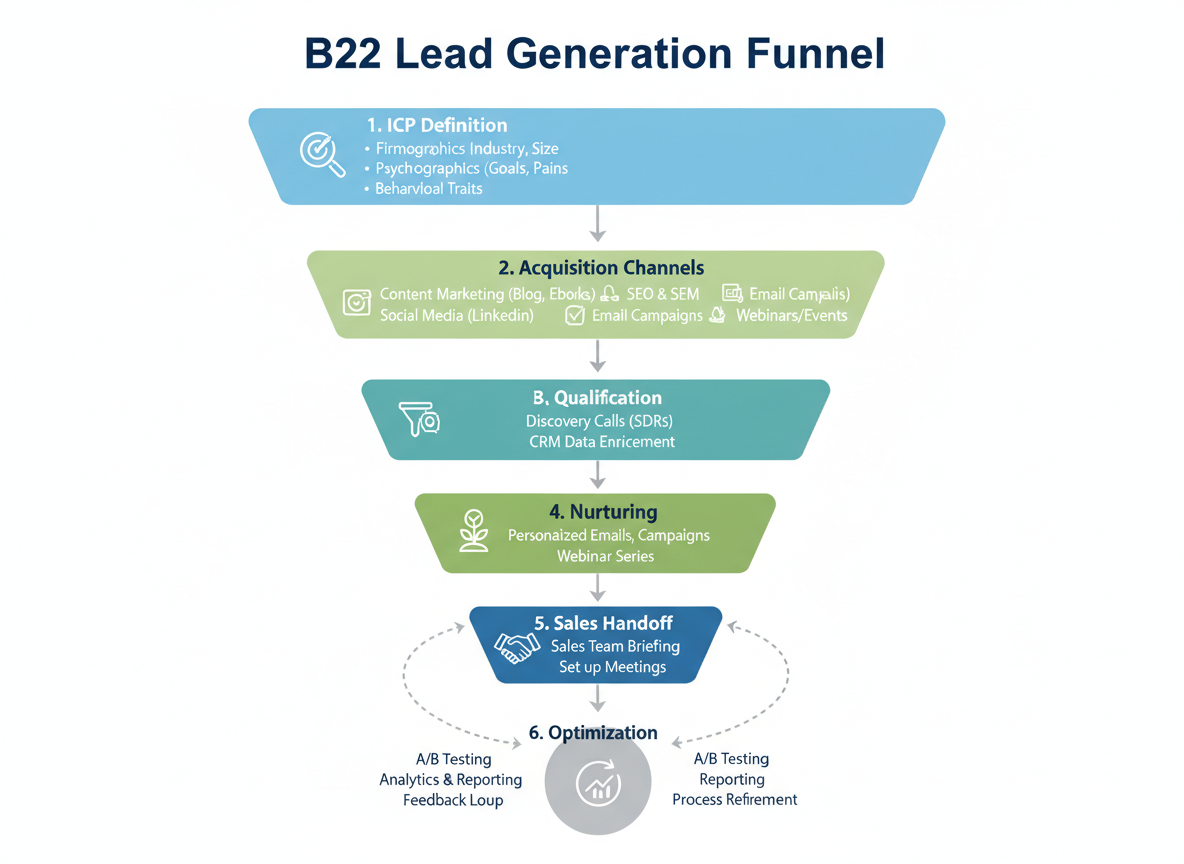
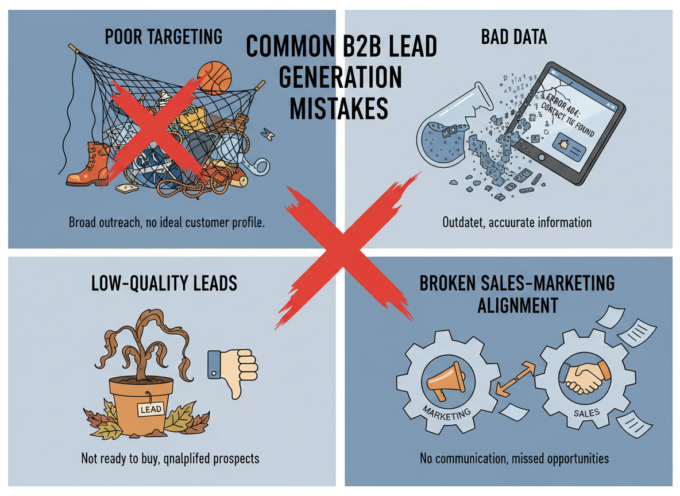
Most B2B companies don’t actually have a funnel — they have disconnected activities. Ads run in isolation, outbound happens without context, and leads are thrown at sales with no preparation. That’s not a funnel; that’s chaos.
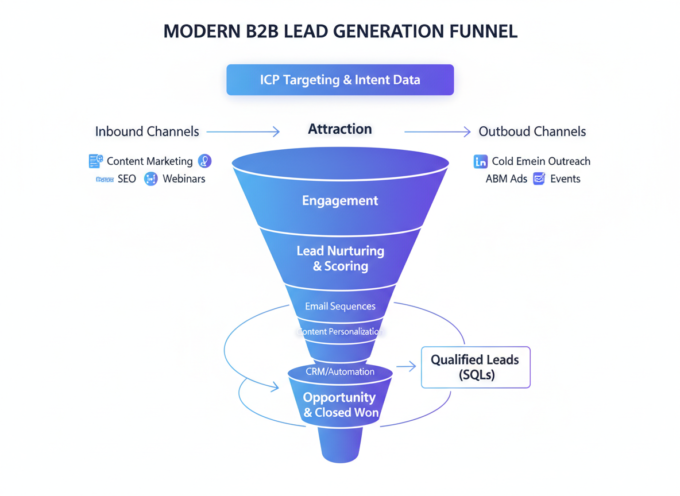
A scalable B2B lead generation funnel is a system. It attracts the right audience, qualifies them correctly, nurtures them intelligently, and hands sales only what’s worth their time.
This article breaks down how to build that system from the ground up.
Step 1: Define Your Ideal Customer Profile (ICP)
Everything in the funnel depends on this step. If your ICP is vague, your funnel will leak from day one.
A strong ICP includes:
- Industry
- Company size
- Revenue range
- Geography
- Tech stack
- Decision-maker roles
Scalability starts with precision, not reach.
Step 2: Map the Buyer Journey
B2B buyers don’t wake up ready to buy. They move through stages.
Typical funnel stages:
- Awareness: identifying the problem
- Consideration: evaluating solutions
- Decision: selecting vendors
Each stage needs different content, messaging, and CTAs. Reusing the same message everywhere is a rookie mistake.
Step 3: Choose the Right Lead Acquisition Channels
Scalability comes from channel mix, not dependence.
Common B2B acquisition channels:
- SEO and content marketing
- Paid media (LinkedIn, search)
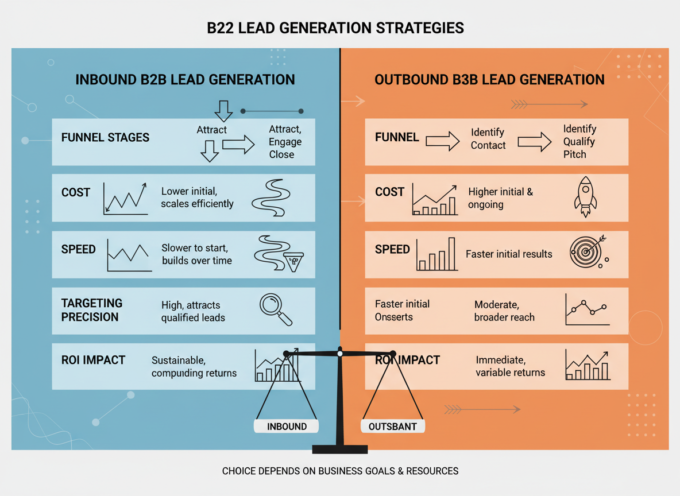
- Outbound email and LinkedIn
- Partnerships and events
Choose channels based on ICP behavior, not trends.
Step 4: Implement Lead Qualification Early
Unqualified leads slow everything down.
Effective qualification methods:
- Firmographic filters
- Behavioral scoring
- Intent data signals
- Engagement thresholds
The goal is simple: sales talks only to sales-ready leads.
Step 5: Build a Lead Nurturing Engine
Most leads need time. Ignoring them is wasted spend.
A scalable nurturing system includes:
- Automated email sequences
- Role-specific messaging
- Educational content
- Trigger-based follow-ups
Nurturing converts interest into intent.
Step 6: Align Sales and Marketing
Funnels break when teams work in silos.
Alignment requires:
- Shared definitions of MQL and SQL
- Clear handoff rules
- Feedback loops from sales
- Revenue-based KPIs
If sales doesn’t trust marketing leads, the funnel fails — no matter how good it looks on paper.
Step 7: Measure, Optimize, and Scale
Scalability is impossible without measurement.
Track:
- Conversion rates per stage
- Cost per qualified lead
- Sales acceptance rate
- Pipeline contribution
Optimize bottlenecks, then scale what works. Scaling a broken funnel only amplifies losses.
Final Thoughts
A scalable B2B lead generation funnel isn’t built overnight. It’s built through clarity, discipline, and continuous optimization.
When done right, the funnel becomes predictable, measurable, and resilient — even as markets change.




Leave a comment