

CRM vs Sales Engagement Platforms What Should B2B Teams Use
 Darshan JainDecember 18, 20252 Mins read0
Introduction
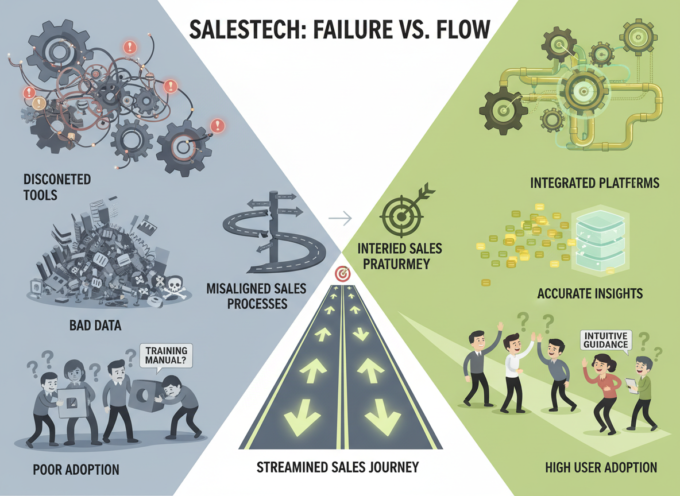
B2B sales teams often struggle to decide whether they need a CRM, a sales engagement platform, or both. This confusion leads to overlapping tools, poor adoption, and inconsistent sales processes.
CRM systems and sales engagement platforms are not interchangeable. They are built for different purposes and serve different users. Understanding their roles is essential for building an effective Sales Technology stack.
This article explains the differences between CRM systems and sales engagement platforms and helps B2B teams decide how to use them correctly.
What a CRM Is Built For
A CRM system is designed to manage relationships, accounts, and revenue.
Its primary purpose is to:
- Store lead and account data
- Track deal stages and pipeline movement
- Record interactions and history
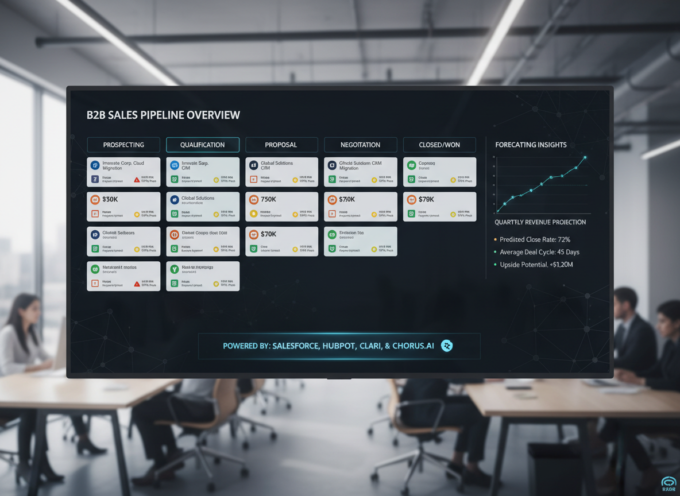
- Support forecasting and reporting
- Act as a single source of truth for sales data
CRMs focus on structure, accuracy, and long term visibility rather than daily outreach execution.
What Sales Engagement Platforms Are Built For
Sales engagement platforms are designed to help sales teams execute outreach efficiently and consistently.
They focus on:
- Managing email and call sequences
- Scheduling follow ups
- Tracking prospect engagement
- Prioritizing outreach based on behavior
- Improving response rates
These platforms support speed and consistency in prospect communication.
Key Differences Between CRM and Sales Engagement Platforms
The difference becomes clear when looking at how each tool is used.
CRM systems emphasize:
- Account and opportunity management
- Revenue tracking
- Data integrity
- Reporting and forecasting
Sales engagement platforms emphasize:
- Outreach execution
- Activity efficiency
- Engagement insights
- Rep productivity
Trying to force one tool to perform the role of the other leads to frustration and data gaps.
How CRM and Sales Engagement Platforms Work Together
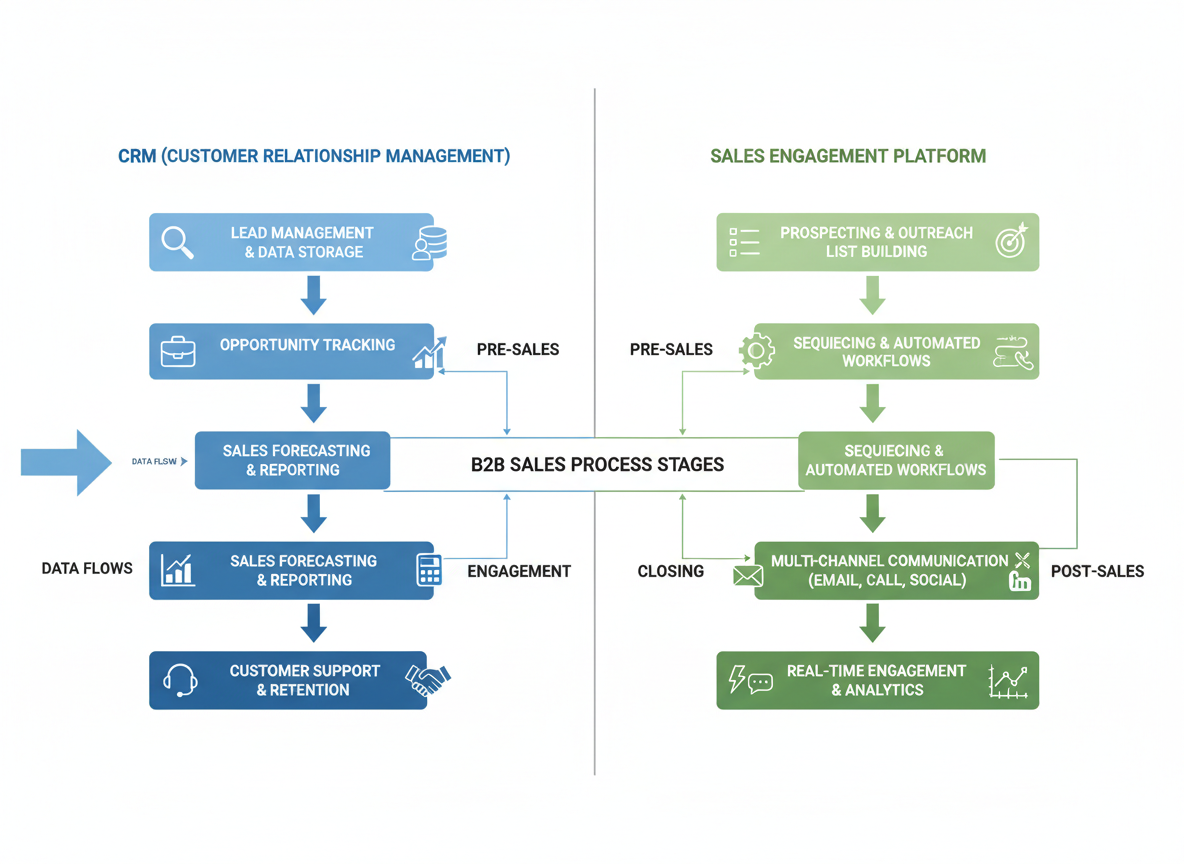
In a strong B2B sales setup, both systems are connected.
A typical flow looks like this:
- Leads and accounts live in the CRM
- Sales engagement platforms pull data from the CRM
- Outreach activity and engagement data flows back
- Deal progression and outcomes remain in the CRM
This setup keeps data clean while enabling fast execution.
Common Mistakes B2B Teams Make
Sales teams often run into problems when they:
- Use CRM systems for bulk outreach
- Fail to sync engagement data back to the CRM
- Let reps work only inside engagement tools
- Ignore data accuracy in the CRM
- Measure activity instead of deal progression
Tools should support process, not replace accountability.
Which One Should B2B Teams Choose
The correct answer is usually not one or the other.
Early stage teams may start with a CRM to establish structure. Growing teams benefit from adding a sales engagement platform once outreach volume increases. Mature teams rely on tight integration between both.
The decision should be driven by sales complexity, team size, and pipeline goals.
Final Thoughts
CRM systems and sales engagement platforms serve different but complementary roles in B2B sales. One manages relationships and revenue. The other enables efficient outreach and follow up.
B2B teams that understand this distinction build cleaner pipelines, improve productivity, and close deals more predictably.





Leave a comment