

B2B Marketing Analytics Metrics That Actually Matter
 Darshan JainDecember 18, 20252 Mins read0
Introduction
B2B marketing teams track dozens of metrics but still struggle to prove impact on revenue. Dashboards are full of numbers, yet decision making remains unclear. This happens because many teams focus on easy to measure metrics instead of meaningful ones.
Analytics should answer one question clearly. Is marketing contributing to pipeline and revenue or not.
This article breaks down the B2B marketing analytics metrics that actually matter and explains why vanity metrics distract teams from real performance.
The Problem With Vanity Metrics
Vanity metrics look impressive but provide little business insight.
Common examples include:
- Page views
- Email opens
- Social followers
- Click counts without context
These numbers may indicate activity, but they do not explain conversion quality or revenue impact.
Lead Quality Metrics
Not all leads are created equal.
Metrics that matter include:
- Marketing qualified lead rate
- Sales accepted lead rate
- Lead to opportunity conversion rate
- Cost per qualified lead
These metrics show whether marketing is attracting the right audience rather than just generating volume.
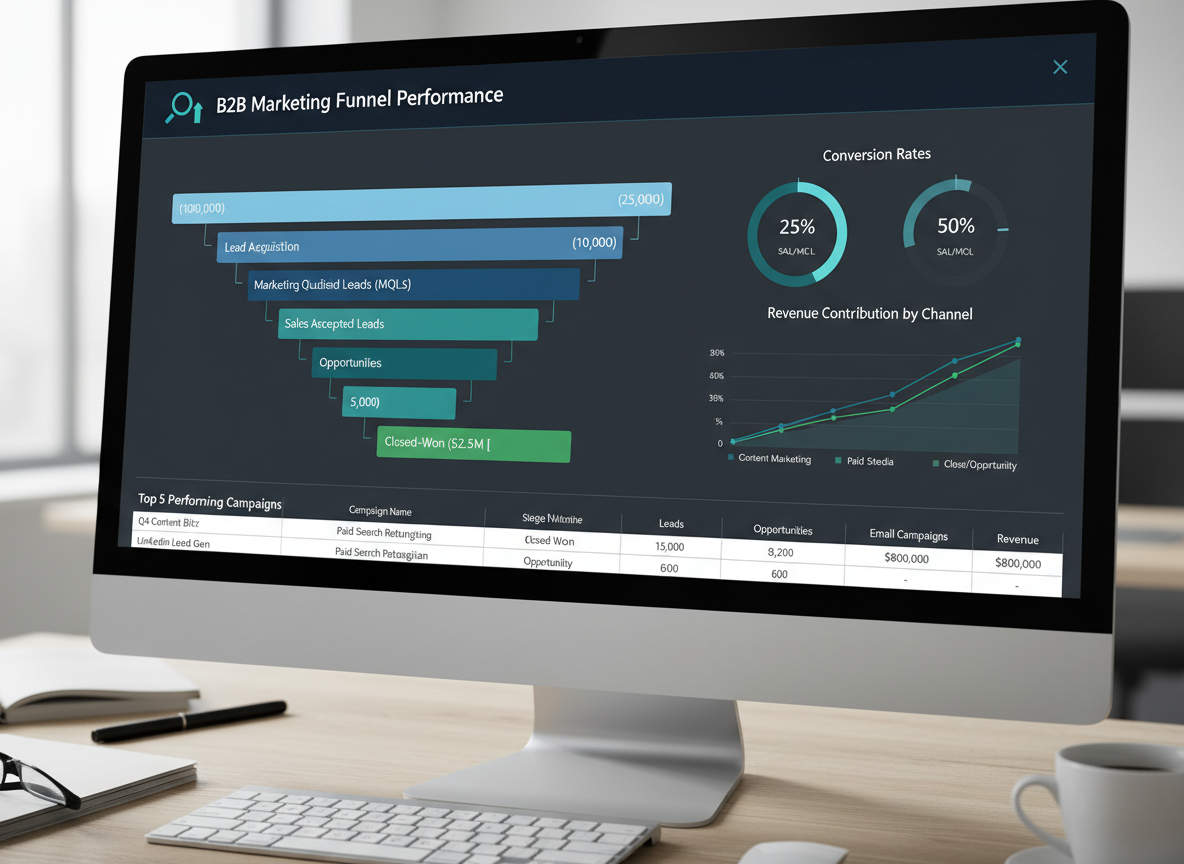
Funnel Conversion Metrics
Understanding how prospects move through the funnel is critical.
Key funnel metrics include:
- Lead to opportunity conversion
- Opportunity to customer conversion
- Drop off rates by stage
- Time spent in each stage
These metrics identify bottlenecks and reveal where performance breaks down.
Pipeline Contribution Metrics
Marketing success must be measured by pipeline influence.
Important metrics include:
- Marketing sourced pipeline value
- Marketing influenced pipeline
- Percentage of total pipeline from marketing
- Revenue attributed to marketing efforts
If marketing does not contribute to pipeline, activity metrics are irrelevant.
Campaign Performance Metrics
Campaign analytics should focus on outcomes, not outputs.
Useful campaign metrics include:
- Cost per opportunity
- Conversion rate by campaign
- Engagement quality by segment
- Revenue impact per campaign
These metrics help teams decide what to scale and what to stop.
Sales Alignment Metrics
Marketing analytics should reflect alignment with sales.
Key indicators include:
- Sales feedback on lead quality
- Lead response time
- Opportunity win rate by lead source
- Revenue per lead source
Strong alignment improves analytics accuracy and trust.
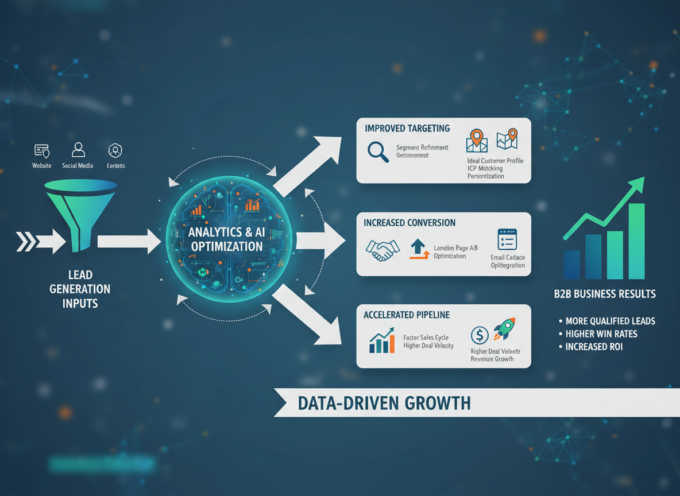
Using Analytics to Drive Decisions
Analytics only matters if it influences action.
High performing teams use analytics to:
- Refine targeting
- Improve messaging
- Reallocate budget
- Optimize funnel stages
- Improve forecasting accuracy
Analytics should guide decisions, not just reporting.
Final Thoughts
B2B marketing analytics is not about tracking everything. It is about tracking what moves revenue. Teams that focus on lead quality, funnel performance, and pipeline contribution gain clarity and credibility.
Metrics that matter create accountability. Everything else is noise.






Leave a comment