

How Poor Data Quality Impacts Revenue and Sales Efficiency
 Darshan JainDecember 18, 20252 Mins read7
Introduction
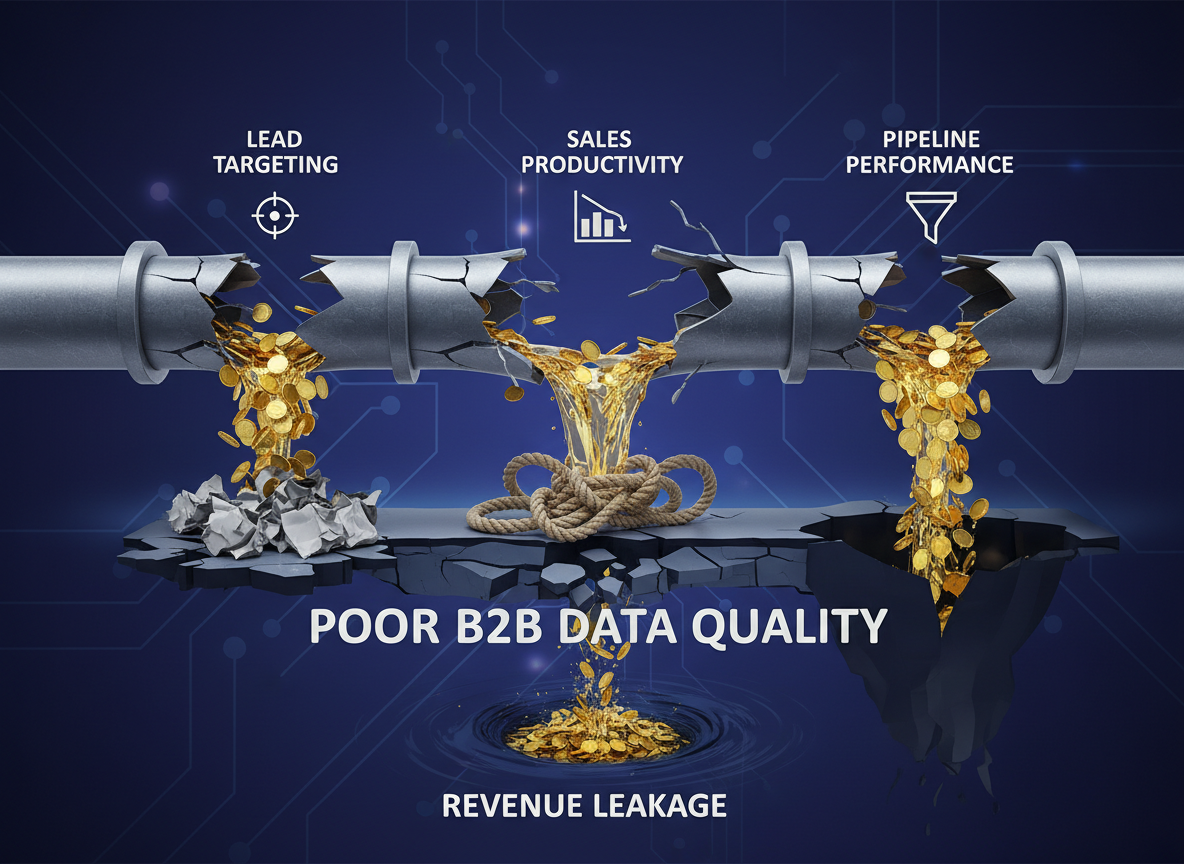
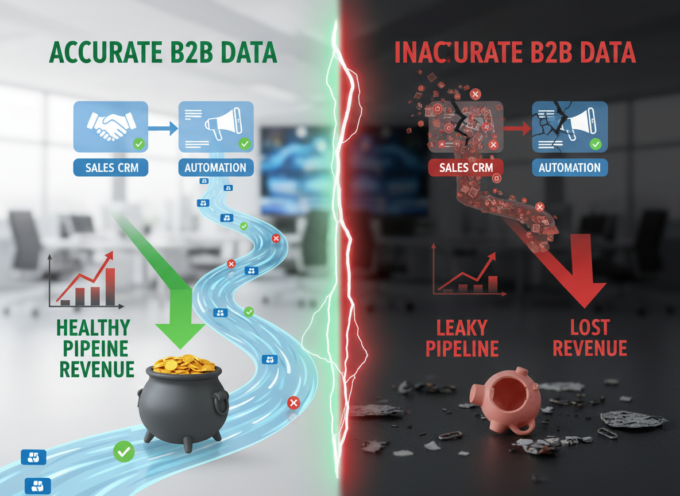
Poor data quality is one of the most underestimated problems in B2B organizations. It does not fail loudly. It fails quietly by slowing sales cycles, lowering conversion rates, and distorting revenue forecasts.
Many teams treat data issues as technical inconveniences rather than business risks. In reality, poor data quality directly impacts revenue generation and sales efficiency.
This article explains how bad data affects B2B performance and why fixing it should be a priority for growth focused organizations.
What Poor Data Quality Looks Like in B2B
Poor data quality appears in several forms.
Common examples include:
- Outdated contact information
- Incorrect job roles or seniority
- Missing company details
- Duplicate records
- Inconsistent data formats
Each issue may seem small on its own, but together they create systemic inefficiency.
Revenue Loss From Poor Targeting
When data quality is low, targeting breaks down.
Marketing campaigns reach the wrong audience. Sales teams contact non decision makers. Messaging feels irrelevant. Engagement drops.
This leads to:
- Lower response rates
- Higher acquisition costs
- Missed buying opportunities
- Lost revenue potential
Poor targeting wastes effort before conversations even begin.
Sales Efficiency Declines With Bad Data
Sales productivity depends on focus.
Poor data forces sales teams to:
- Spend time researching basic information
- Chase unqualified contacts
- Correct inaccurate records
- Restart conversations repeatedly
This reduces selling time and increases frustration. Sales efficiency declines without obvious warning signs.
Impact on Pipeline and Forecast Accuracy
Data quality directly affects pipeline reliability.
When data is inaccurate:
- Deals are misclassified
- Pipeline stages lose meaning
- Forecasts become unreliable
- Leadership decisions suffer
Revenue predictability depends on data consistency across systems.
Poor Data Undermines Trust Between Teams
Bad data damages alignment.
Sales teams lose confidence in marketing leads. Marketing struggles to prove impact. Leadership questions reporting accuracy.
Once trust is lost, collaboration breaks down and performance follows.
The Cost of Ignoring Data Quality
Ignoring data issues compounds over time.
Long term consequences include:
- Slower growth
- Higher operational costs
- Poor customer experience
- Reduced competitive advantage
Data decay is constant. Inaction guarantees decline.
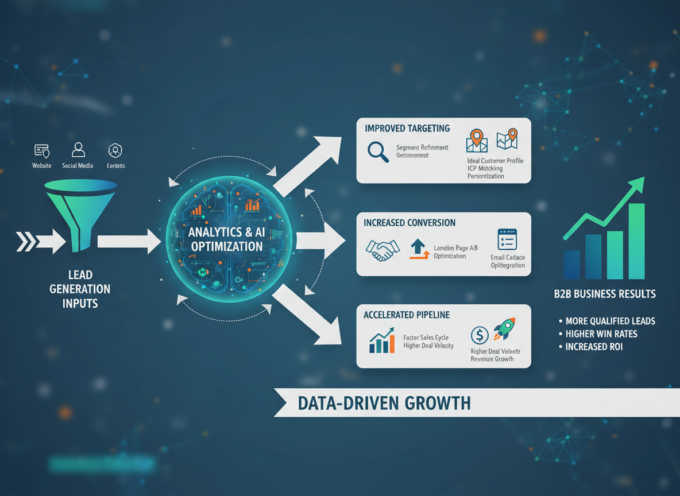
How High Quality Data Improves Revenue Outcomes
When data quality improves:
- Targeting becomes precise
- Conversion rates increase
- Sales cycles shorten
- Forecasts stabilize
- Revenue becomes predictable
Clean data amplifies every sales and marketing effort.
Final Thoughts
Poor data quality is not a technical issue. It is a revenue problem. B2B organizations that treat data as a strategic asset outperform those that treat it as an afterthought.
Fixing data quality improves efficiency, alignment, and revenue performance across the organization.




Leave a comment