

How Intent Data Improves B2B Lead Targeting and Conversion Rates
 Darshan JainDecember 18, 20252 Mins read7
Introduction
B2B marketers and sales teams struggle with the same problem year after year. They know who their ideal customers are, but they do not know when those customers are ready to buy. This gap is where intent data becomes powerful.
Intent data helps teams identify buying signals before prospects raise their hand. When used correctly, it improves targeting precision, increases conversion rates, and shortens sales cycles.
This article explains what intent data is, how it works, and why it has become essential for modern B2B lead generation.
What Intent Data Means in B2B
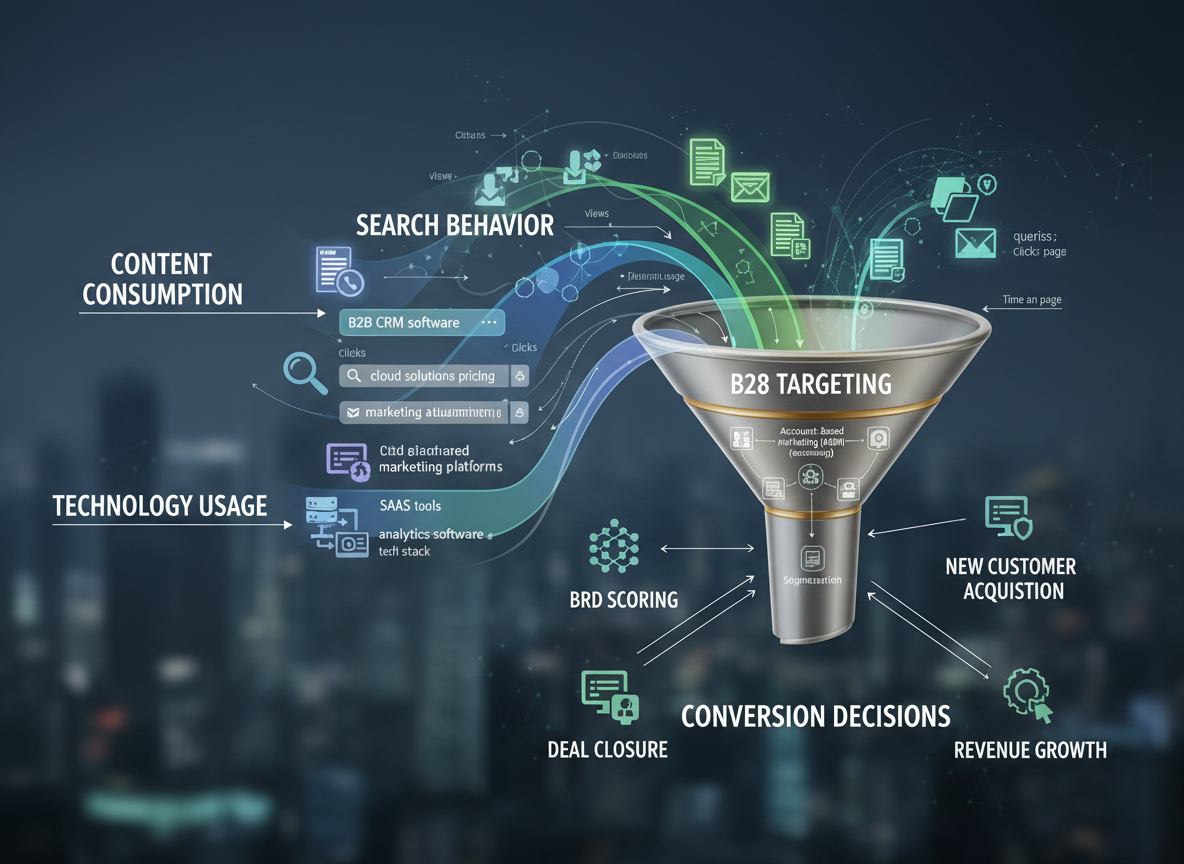
Intent data captures behavioral signals that indicate interest in a product category or solution.
Common intent signals include:
- Content consumption patterns
- Keyword and topic searches
- Website visits and engagement depth
- Technology research activity
- Product comparison behavior
These signals reveal interest levels long before direct inquiries occur.
Types of Intent Data Used by B2B Teams
Intent data generally falls into two categories.
First party intent data comes from interactions with your own assets such as websites, emails, and content downloads. It shows direct engagement with your brand.
Third party intent data comes from external sources and indicates broader research behavior across the web. It shows interest in a category even before prospects engage with your company.
Both types provide value when combined thoughtfully.
How Intent Data Improves Lead Targeting
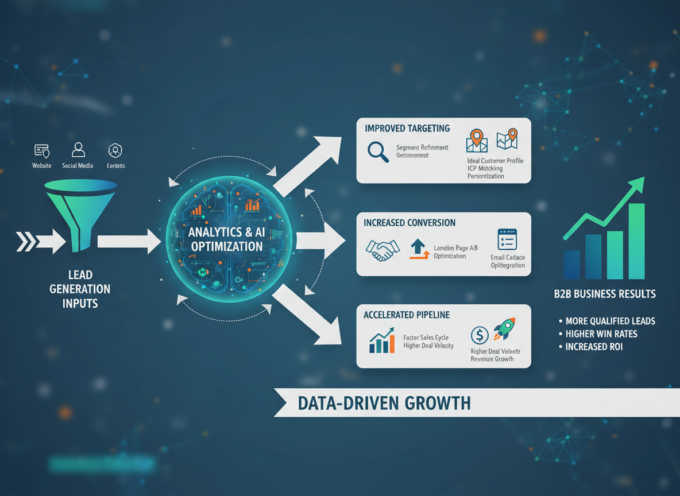
Traditional targeting relies on firmographics and job roles. Intent data adds timing and relevance.
With intent data, teams can:
- Prioritize accounts showing active interest
- Focus outreach on high intent prospects
- Reduce wasted effort on cold accounts
- Personalize messaging based on researched topics
Better targeting leads to higher response rates and improved efficiency.
Impact of Intent Data on Conversion Rates
Intent driven outreach feels relevant instead of intrusive.
Benefits include:
- Higher email and call response rates
- Shorter sales cycles
- Better alignment between marketing and sales
- Increased deal win rates
When outreach aligns with buyer interest, conversations progress faster.
Using Intent Data Across the Funnel
Intent data supports multiple funnel stages.
Marketing teams use it to:
- Adjust campaign messaging
- Trigger personalized nurturing
- Prioritize content delivery
Sales teams use it to:
- Focus on the right accounts
- Time outreach effectively
- Tailor conversations to buyer needs
Intent data connects awareness to action.
Common Mistakes When Using Intent Data
Intent data loses value when teams:
- Treat all signals as equal
- Ignore data freshness
- Fail to align sales and marketing usage
- Rely on intent without qualification
- Over automate outreach
Intent data should guide decisions, not replace judgment.
Final Thoughts
Intent data gives B2B teams what traditional data cannot: insight into buyer readiness. When combined with accurate firmographic data and disciplined processes, it dramatically improves targeting and conversion performance.
Used correctly, intent data shifts lead generation from guessing to precision.




Leave a comment