

How Sales Technology Improves Forecasting and Revenue Predictability
 Darshan JainDecember 18, 20252 Mins read7
Introduction
Revenue forecasting is one of the hardest problems in B2B sales. Many organizations rely on spreadsheets, outdated CRM reports, or subjective rep opinions to predict future revenue. The result is missed targets, poor planning, and leadership decisions based on guesswork.
Sales Technology changes this by introducing structure, consistency, and data driven insight into the forecasting process. When implemented correctly, it transforms forecasting from an estimate into a reliable business function.
Why Forecasting Fails in Traditional Sales Teams
Forecasting problems usually stem from process issues rather than market conditions.
Common causes include:
- Incomplete CRM data
- Inconsistent deal stage definitions
- Overoptimistic rep estimates
- Lack of visibility into deal activity
- No historical performance context
Without reliable data, forecasts become opinions instead of predictions.
The Role of CRM in Revenue Forecasting
CRM systems form the foundation of accurate forecasting.
A properly used CRM enables teams to:
- Track deal stages consistently
- Assign realistic deal values
- Monitor pipeline movement
- Compare current pipeline against historical performance
CRM accuracy directly determines forecast credibility.
How Sales Technology Adds Intelligence to Forecasts
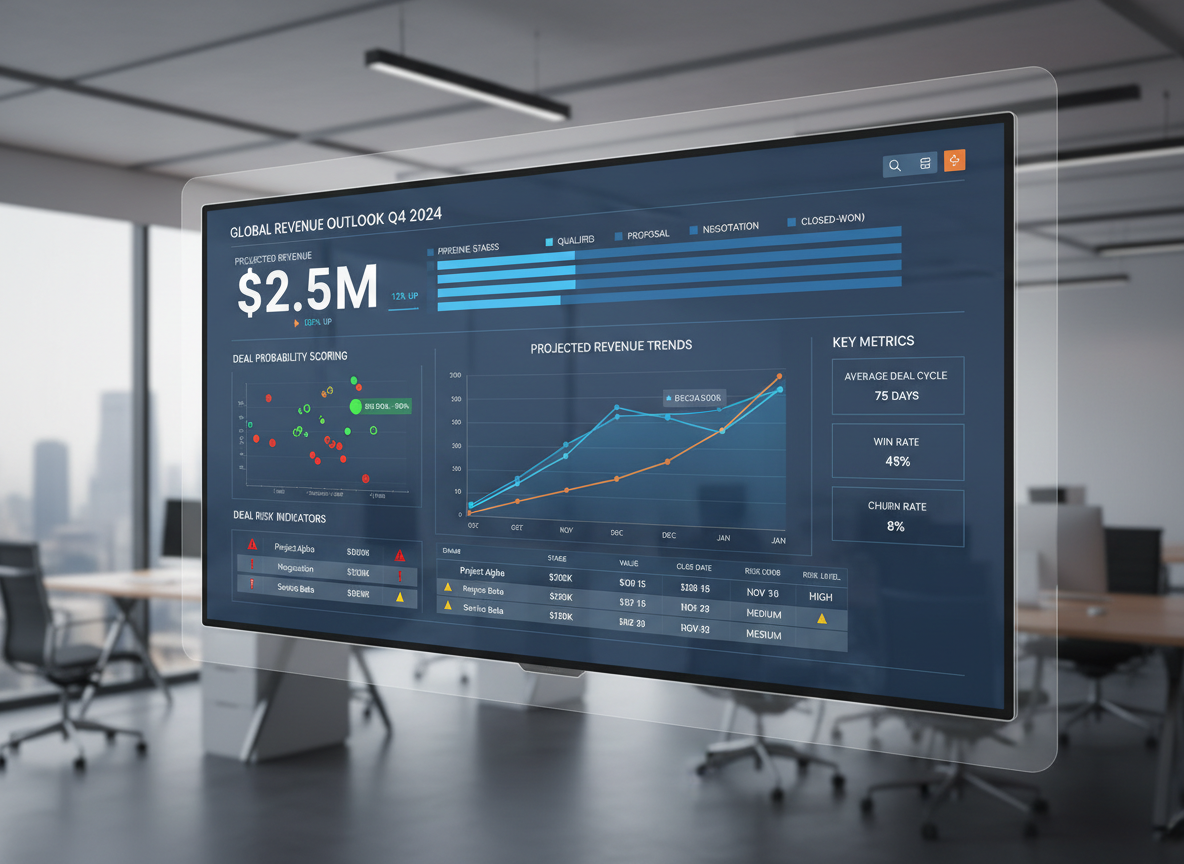
Modern SalesTech tools go beyond static reporting.
They introduce capabilities such as:
- Probability based deal scoring
- Activity and engagement analysis
- Historical trend comparison
- Risk identification for stalled deals
These insights help sales leaders identify which deals are real and which are unlikely to close.
Revenue Intelligence and Predictive Insights
Advanced SalesTech platforms analyze patterns across deals, reps, and time periods.
They help organizations:
- Predict deal outcomes more accurately
- Identify revenue gaps early
- Adjust strategy before targets are missed
- Improve confidence in leadership reporting
Predictive insight reduces surprises and improves planning accuracy.
Improved Forecasting Drives Better Business Decisions
Reliable forecasts impact more than sales teams.
Accurate revenue visibility supports:
- Hiring and resource planning
- Marketing investment decisions
- Inventory and delivery planning
- Executive and board level reporting
When forecasts improve, the entire organization benefits.
Common Mistakes That Undermine Forecast Accuracy
Even with SalesTech, forecasting fails when teams:
- Skip CRM updates
- Inflate deal probabilities
- Ignore engagement data
- Fail to review forecasts regularly
- Treat forecasting as a monthly task instead of an ongoing process
Technology supports forecasting discipline but does not replace it.
Final Thoughts
Sales Technology improves forecasting and revenue predictability by replacing assumptions with data and structure. When forecasting is grounded in real activity, engagement signals, and historical trends, sales leaders can make confident decisions.
Predictable revenue is not a result of luck. It is the result of disciplined process supported by the right Sales Technology.




Leave a comment