

What Is Sales Technology and Why It Matters for B2B Sales Teams
 Darshan JainDecember 18, 20252 Mins read7

Introduction
Sales Technology, often called SalesTech, has become essential for modern B2B sales teams. Yet many organizations still misunderstand its role. They treat sales tools as activity trackers instead of revenue enablers, then wonder why productivity and close rates remain flat.
SalesTech is not about replacing salespeople. It is about removing friction, improving visibility, and enabling sales teams to focus on high value conversations that actually move deals forward.
This article explains what Sales Technology really is and why it plays a critical role in B2B sales success.
What Is Sales Technology
Sales Technology refers to the software and platforms that support sales teams throughout the entire sales cycle, from prospecting to deal closure and revenue forecasting.
In a B2B environment, SalesTech helps teams:
- Manage prospects and accounts
- Track interactions and engagement
- Automate repetitive tasks
- Improve pipeline visibility
- Forecast revenue more accurately
SalesTech exists to support execution, not to create artificial activity.
Core Components of a B2B SalesTech Stack
Customer Relationship Management Systems
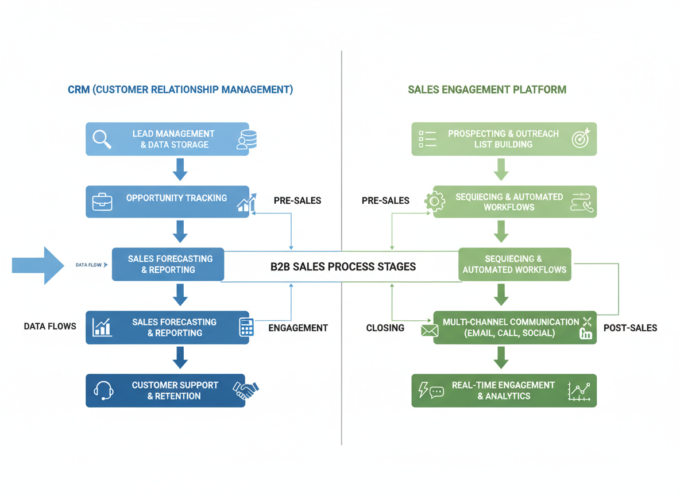
CRM platforms serve as the foundation of SalesTech. They store account data, track deal stages, and provide a single source of truth for sales activity and revenue.
Without a properly implemented CRM, SalesTech becomes fragmented and unreliable.
Sales Engagement Tools
These tools help sales teams manage outreach across email, calls, and social channels. They improve follow up consistency and provide insight into prospect engagement.
When used correctly, sales engagement tools increase response rates without overwhelming prospects.
Pipeline and Forecasting Tools
Forecasting tools help sales leaders understand pipeline health, deal risk, and expected revenue. They replace gut feeling with data driven insights.
Accurate forecasting improves decision making across sales, marketing, and leadership.
Analytics and Performance Tools
Sales analytics platforms track conversion rates, activity effectiveness, and rep performance. They highlight what works and expose inefficiencies.
Data driven sales teams outperform teams that rely only on experience.
Why Sales Technology Matters in B2B Sales
B2B sales cycles are long, complex, and involve multiple stakeholders. Manual tracking and disconnected systems cannot handle this complexity at scale.
SalesTech matters because it:
- Improves focus on high intent opportunities
- Reduces time spent on admin work
- Improves follow up timing and consistency
- Increases pipeline transparency
- Enables predictable revenue growth
Without SalesTech, scaling sales becomes chaotic and inefficient.
How SalesTech Improves Sales Productivity
Productivity is not about doing more. It is about doing the right things.
SalesTech improves productivity by:
- Automating routine tasks
- Prioritizing leads based on engagement
- Reducing manual data entry
- Providing clear next step guidance
This allows sales reps to spend more time selling and less time managing tools.
Common Misconceptions About Sales Technology
Many teams fail to see results because they believe:
- More tools equal better performance
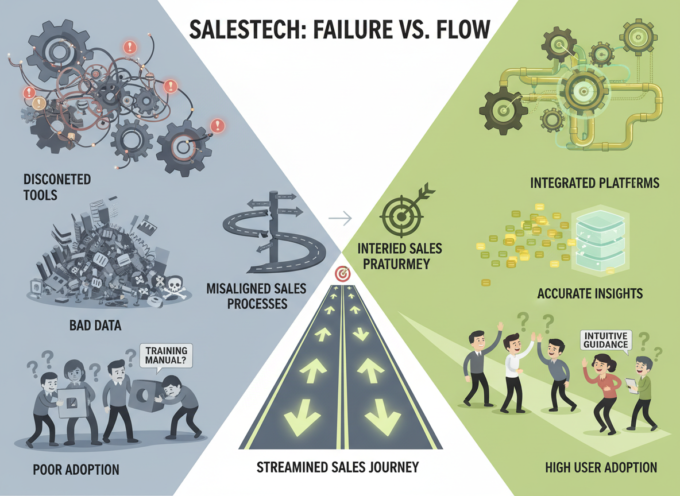
- SalesTech can fix poor sales processes
- Activity volume matters more than deal quality
- Tools can replace training and discipline
SalesTech amplifies process quality. It does not compensate for weak fundamentals.
Final Thoughts
Sales Technology is a critical enabler for modern B2B sales teams. When implemented with clear processes, clean data, and proper alignment, it improves efficiency, visibility, and revenue predictability.
The goal of SalesTech is not more dashboards or more automation. The goal is better sales execution at scale.






Leave a comment