

Marketing Automation vs CRM: Understanding the Real Differences
 Darshan JainDecember 18, 20252 Mins read7
Introduction
Many B2B teams confuse marketing automation and CRM, or worse, assume one can replace the other. This misunderstanding leads to poor implementation, broken processes, and wasted budgets.
Marketing automation and CRM are not competitors. They solve different problems and are designed for different users. When used together correctly, they create a connected revenue engine. When misused, they create silos and friction.
This article explains the real differences between marketing automation and CRM in a B2B environment.
What a CRM Is Designed to Do
A Customer Relationship Management system is primarily built for sales teams.
Core CRM functions include:
- Managing leads, contacts, and accounts
- Tracking sales activities and interactions
- Managing pipelines and deal stages
- Forecasting revenue
- Recording customer history
The CRM is the system of record for revenue-related data.
What Marketing Automation Is Designed to Do
Marketing automation platforms are built for marketing execution and scalability.
Core marketing automation functions include:
- Automating email campaigns and workflows
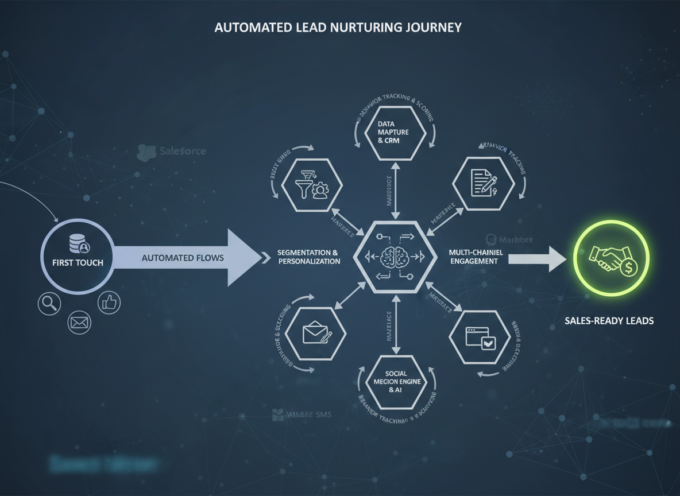
- Lead nurturing and engagement tracking
- Lead scoring based on behavior
- Campaign performance measurement
- Managing marketing touchpoints before sales involvement
Marketing automation handles volume and timing, not deal management.
Key Differences Between Marketing Automation and CRM
The distinction becomes clear when you look at intent and usage.
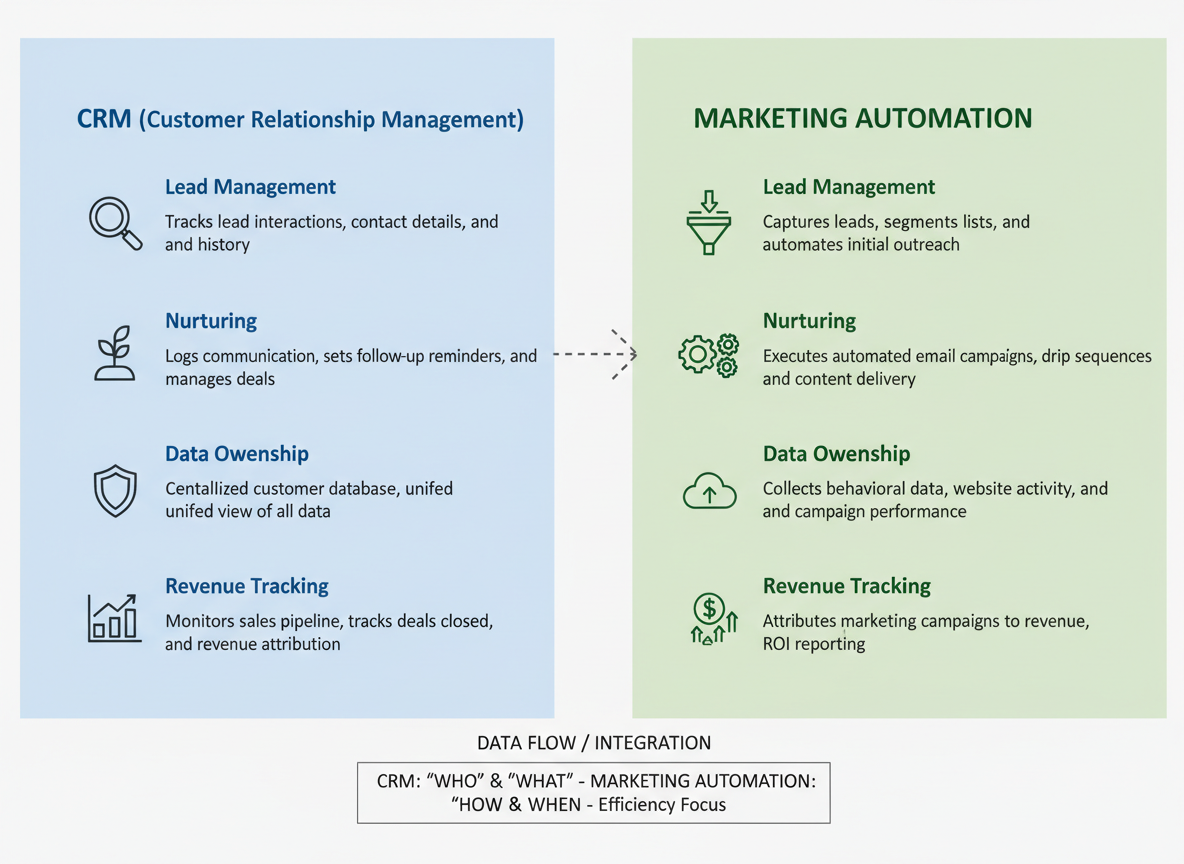
CRM focuses on:
- One-to-one sales interactions
- Opportunity management
- Revenue tracking
- Sales productivity
Marketing automation focuses on:
- One-to-many communication
- Lead nurturing at scale
- Pre-sales engagement
- Campaign efficiency
Trying to force one tool to do both jobs leads to inefficiency.
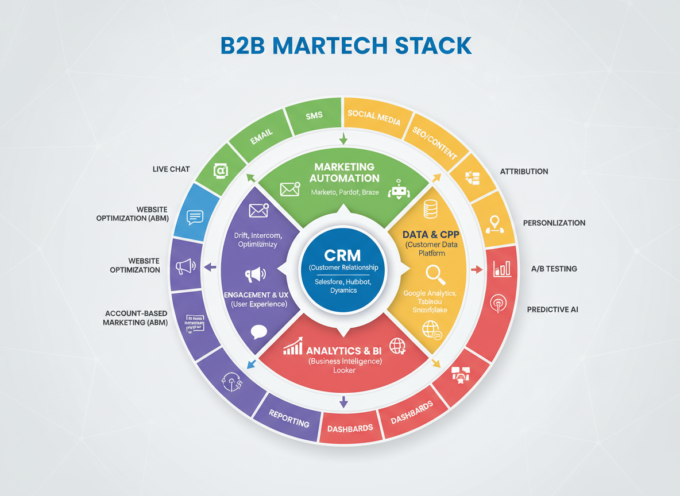
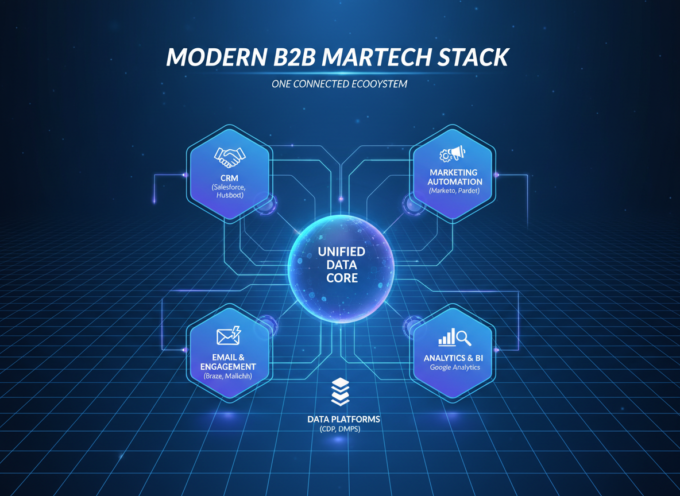
How CRM and Marketing Automation Work Together
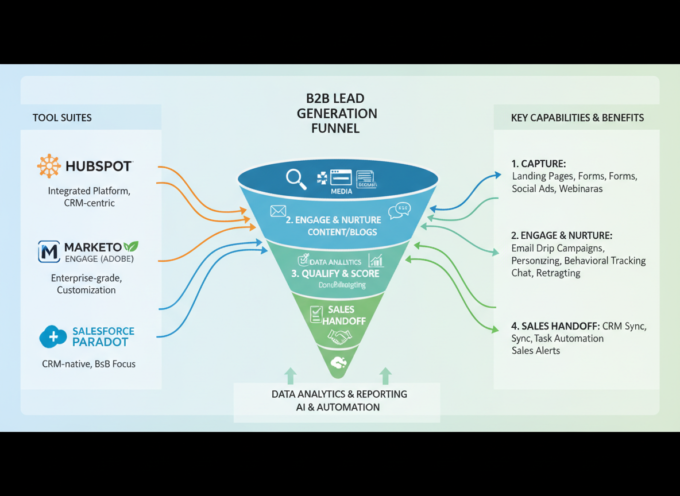
In a proper B2B setup:
- Marketing automation captures and nurtures leads
- Qualified leads are passed to CRM
- Sales manages opportunities and deals
- Feedback flows back to marketing for optimization
Integration ensures data consistency, visibility, and alignment.
Common Mistakes B2B Teams Make
These errors are extremely common:
- Using CRM to send bulk marketing emails
- Using marketing automation to manage deals
- Poor or incomplete data synchronization
- No shared lead definitions
- Sales and marketing working in isolation
These mistakes reduce trust and hurt conversion rates.
Which One Should You Invest in First?
The answer depends on your maturity level.
- Early-stage teams often start with CRM
- Growing teams add marketing automation for scale
- Mature teams tightly integrate both systems
Skipping one or misusing either creates gaps in the funnel.
Final Thoughts
Marketing automation and CRM serve different purposes but support the same goal: revenue growth. One drives engagement and qualification, the other drives conversion and closure.
B2B teams that understand this distinction build stronger, more predictable pipelines.




Leave a comment